
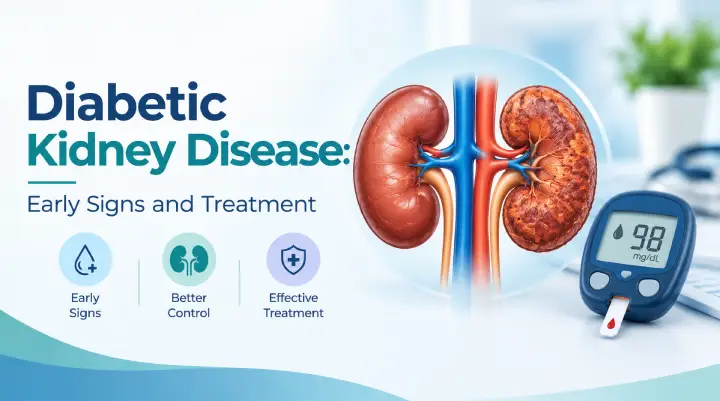
If you live with diabetes, your kidneys are working harder than you may realise. Every day they filter blood that carries excess sugar, and over the years that constant load can quietly injure their delicate filters. This is diabetic kidney disease (DKD), also called diabetic nephropathy, and it is the leading cause of chronic kidney disease (CKD) and kidney failure worldwide, including in India.
The most important thing to know is that DKD is usually silent in its early years. By the time swelling or fatigue appear, a significant amount of function may already be lost. The good news is that with timely testing and modern treatment, its progression can be slowed dramatically, and sometimes almost halted.
Contents
- 1 What Is Diabetic Kidney Disease?
- 2 Early Signs of Diabetic Kidney Disease
- 3 How Is DKD Diagnosed?
- 4 Treatment Options for Diabetic Kidney Disease
- 5 Medicines and Kidney Function
- 6 When Kidneys Fail: Dialysis and Transplant
- 7 Can Diabetic Kidney Disease Be Prevented?
- 8 Consult a Nephrologist: Dr. Deepali Kaushal
What Is Diabetic Kidney Disease?
Each kidney contains about a million tiny filtering units called nephrons. Persistently high blood sugar damages the small blood vessels inside these filters (the glomeruli), making them leaky and scarred. Raised pressure inside the filters and inflammation add to the injury. As a result, the kidneys start leaking protein, mainly albumin, into the urine, and later lose their ability to clear waste from the blood.
DKD affects roughly one in three people with type 1 or type 2 diabetes. Risk rises with longer duration of diabetes, poor sugar control, high blood pressure, obesity, smoking and a family history of kidney disease.
Early Signs of Diabetic Kidney Disease
In the earliest stage there are often no symptoms at all. The first sign is usually found only on a urine test. As the disease advances, you may notice the following changes.
| Sign | What Is Happening | What to Do |
| Microalbuminuria (on test) | Small amounts of albumin leak through damaged filters. This is the earliest detectable marker. | Get a urine ACR test every year |
| Foamy or frothy urine | Larger protein leak changes how urine looks when passed. | Book a kidney check-up |
| Swollen feet, ankles or puffy eyes | Protein loss lowers blood protein and the body retains salt and water. | Consult a nephrologist soon |
| Rising blood pressure | Damaged kidneys cannot regulate fluid and salt, which pushes BP up. | Monitor BP at home and treat early |
| Persistent tiredness | Waste build-up and reduced red blood cell production cause anaemia. | Check haemoglobin and eGFR |
| Falling insulin or tablet needs | Failing kidneys clear insulin more slowly, so sugars may drop unexpectedly. | Tell your doctor; doses need review |
| Itching, nausea, poor appetite | Waste products accumulate in later stages. | See a specialist promptly |
Important: Diabetic eye disease (retinopathy) and nerve damage (neuropathy) often occur alongside DKD. If you have either one, your kidneys deserve a closer look.
How Is DKD Diagnosed?
Diagnosis is simple, inexpensive and painless. Two tests do most of the work:
- Urine albumin-to-creatinine ratio (ACR): detects protein leakage. An ACR of 30 mg/g or more, persisting for more than three months, points to kidney damage.
- Blood creatinine and eGFR: eGFR estimates how well the kidneys are filtering. A value below 60 for three months or more indicates CKD.
An ultrasound may be added to check kidney size and rule out other problems. A kidney biopsy is needed only when the picture is unusual, for example heavy protein loss soon after diabetes began, blood in the urine or rapidly falling function.
Screening should start at diagnosis for people with type 2 diabetes, and five years after diagnosis for type 1. After that, it should be repeated at least once every year.
Read More :- Chronic Kidney Disease (CKD) in Punjab: Causes, Stages & Best Treatment Centers
Treatment Options for Diabetic Kidney Disease
Treatment works on several fronts at once: protecting the kidneys directly, controlling sugar and blood pressure, and reducing heart risk, since people with DKD are far more likely to have heart attacks and strokes.
| Treatment | How It Helps | Key Point |
| Blood sugar control | Slows damage to kidney blood vessels. | HbA1c target is individualised, often around 7% |
| ACE inhibitors / ARBs | Lower pressure inside the filters and reduce protein leakage. | First choice when albuminuria is present |
| SGLT2 inhibitors | Reduce kidney progression, heart failure and cardiovascular events. | Benefit even at lower eGFR levels |
| Finerenone | Blocks a hormone pathway that drives kidney inflammation and scarring. | Potassium must be monitored |
| GLP-1 receptor agonists | Improve sugar and weight; shown to protect kidney and heart. | Useful when SGLT2 alone is not enough |
| Blood pressure control | Reduces strain on the kidneys. | Target usually below 130/80 mmHg |
| Statins | Lower cholesterol and heart risk. | Recommended for most patients |
| Diet and lifestyle | Supports every other treatment. | Low salt, no smoking, regular exercise |
Medicines and Kidney Function
Kidney function changes how drugs behave. Metformin needs dose adjustment as eGFR falls and is stopped at very low levels. Some sulphonylureas and insulin can cause dangerous low sugars. Pain-killers such as ibuprofen, diclofenac and other NSAIDs can injure diabetic kidneys and should be avoided unless your doctor approves. Never stop or change medicines on your own; a nephrologist and your diabetes doctor should work together.
Diet and Lifestyle
- Cut salt: aim for under 5 grams of salt a day. Limit pickles, papad, namkeen and processed foods.
- Moderate protein: about 0.8 g per kg body weight in most people with DKD. Avoid high-protein supplements unless advised.
- Choose carbohydrates wisely: whole grains, dals and vegetables over refined flour and sugary drinks.
- Stay active: 30 minutes of brisk walking on most days improves sugar, weight and blood pressure.
- Quit tobacco: smoking speeds up kidney decline and multiplies heart risk.
- Watch potassium and phosphorus: only in advanced stages, and only as your specialist advises.
Read More :- What Is eGFR and What Does It Tell You About Kidney Health?
When Kidneys Fail: Dialysis and Transplant
If DKD progresses to stage 5 (eGFR below 15), kidney replacement therapy becomes necessary. Options include haemodialysis, peritoneal dialysis and kidney transplantation. A transplant usually offers the best long-term survival and quality of life. Preparing early, including protecting veins for dialysis access and discussing transplant, leads to much better outcomes than an emergency start.
Can Diabetic Kidney Disease Be Prevented?
In many cases it can be delayed or prevented. Keep sugar and blood pressure in range, get your urine ACR and eGFR checked every year, maintain a healthy weight, avoid self-medicating with pain-killers and treat any protein in the urine early. Remember: kidney damage found early is far easier to control than damage found late.
Consult a Nephrologist: Dr. Deepali Kaushal
Dr. Deepali Kaushal is a nephrologist at Dhiman’s Gastro Clinics, Khanna, Punjab, with more than 11 years of experience in kidney care. She holds a DM in Nephrology and an MD in Internal Medicine, a combination that helps her look at the whole patient rather than the kidneys alone. She manages diabetic kidney disease, chronic kidney disease, hypertension-related kidney problems, glomerular diseases, kidney stones and dialysis care, and she focuses on early detection and personalised treatment plans that protect kidney function for as long as possible. If you have diabetes and have not had a kidney check in the last year, you can book a consultation by calling 📞 +91 77194 80279
🌐 View Profile

 Call Us
 WhatsApp
 Locate Us