
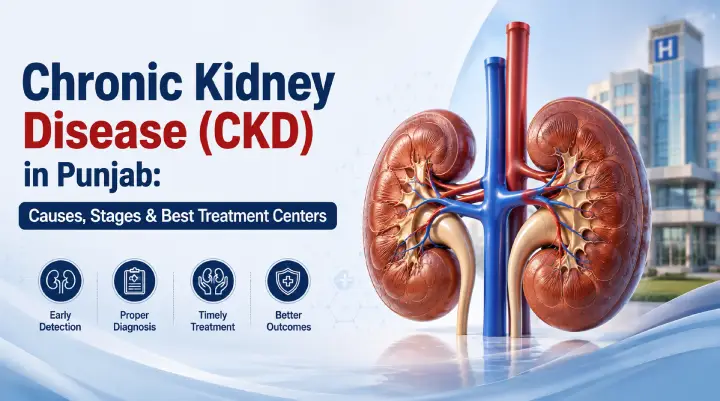
Quick Summary: Chronic Kidney Disease (CKD) is silently affecting thousands of families across Punjab. With rising diabetes rates, unhealthy dietary habits, and limited awareness, Punjab has become a high-risk state for kidney disease. This comprehensive guide covers everything you need to know about CKD — from early warning signs and stages to the best treatment centers and kidney specialists in Punjab, including expert care available in Khanna.
What is Chronic Kidney Disease (CKD)?
Chronic Kidney Disease (CKD) is a long-term condition where the kidneys gradually lose their ability to filter waste products and excess fluids from the blood. Over time, this leads to a dangerous buildup of toxins in the body, affecting nearly every organ system.
The kidneys are remarkable organs — each about the size of a fist — that perform over 500 vital functions, including:
- Filtering blood and removing waste through urine
- Regulating blood pressure
- Balancing electrolytes (sodium, potassium, calcium)
- Producing hormones that stimulate red blood cell production
- Maintaining bone health by activating Vitamin D
When kidney function drops below 60% for more than three months, it is classified as CKD. The scary part? Most people don’t experience symptoms until 70-80% of kidney function is already lost.
Contents
- 1 Why is Punjab a High-Risk State for CKD?
- 2 Stages of Chronic Kidney Disease (CKD)
- 3 Early Warning Signs and Symptoms of CKD
- 4 Major Causes of CKD in Punjab
- 5 Diagnosis: How is CKD Detected?
- 6 Treatment Options for CKD in Punjab
- 7 Best CKD Treatment Centers in Punjab
- 8 Why Choose Dr. Deepali Kaushal for CKD Treatment in Khanna?
- 9 Kidney-Friendly Diet Tips for Punjabi Patients
- 10 Prevention: Can CKD Be Prevented?
- 11 Frequently Asked Questions (FAQ)
- 12 Conclusion:
Why is Punjab a High-Risk State for CKD?
Punjab, often called the “Granary of India,” is unfortunately also becoming a hotspot for chronic diseases, including CKD. Several factors contribute to this alarming trend:
Skyrocketing Diabetes Prevalence
Punjab has one of the highest rates of Type 2 diabetes in India. According to health surveys, nearly 12-14% of Punjab’s adult population is diabetic — and diabetes is the leading cause of CKD worldwide. High blood sugar damages the tiny blood vessels in the kidneys (glomeruli), leading to diabetic nephropathy, which accounts for nearly 40-50% of all CKD cases in Punjab.
The Punjabi Diet: A Double-Edged Sword
The traditional Punjabi diet, while delicious and rich in culture, poses significant risks when consumed in excess:
- High salt intake: Pickles (achaar), processed foods, and excessive table salt raise blood pressure — the second leading cause of CKD.
- High protein & fat: Butter-laden parathas, creamy dal makhani, and fried snacks increase the kidney’s workload.
- Sugar-loaded beverages: Sweet lassi, sodas, and excessive tea with sugar contribute to obesity and diabetes.
- Alcohol consumption: Punjab has higher-than-average alcohol consumption, which directly damages kidneys and raises blood pressure.
Pesticide and Groundwater Contamination
Several regions in Punjab, particularly the Malwa belt, have reported high levels of heavy metals (uranium, arsenic) and pesticides in groundwater. Long-term exposure to these contaminants has been linked to higher rates of kidney disease, including a specific condition called Chronic Kidney Disease of Unknown Etiology (CKDu), which affects agricultural communities.
Genetic Predisposition
Studies suggest that South Asians, including Punjabis, may have a genetic predisposition to developing diabetes and kidney disease at lower body mass indexes (BMI) compared to other populations. This means even moderately overweight individuals in Punjab face higher kidney risks.
Lack of Routine Screening
Perhaps the most critical factor is the lack of regular kidney function testing. Most people in Punjab visit a doctor only when symptoms become severe — by which time significant kidney damage has already occurred. Simple, inexpensive tests like Serum Creatinine, Blood Urea Nitrogen (BUN), and Urine Albumin can detect CKD years before symptoms appear.
Stages of Chronic Kidney Disease (CKD)
CKD is classified into five stages based on the Glomerular Filtration Rate (GFR) — a measure of how well your kidneys filter blood. Understanding these stages helps in early intervention and treatment planning.
| Stage | GFR (mL/min/1.73m²) | Kidney Function | Description |
|---|---|---|---|
| Stage 1 | ≥ 90 | Normal or high | Kidneys function normally but other signs of kidney damage present (protein in urine, physical abnormalities). Reversible with treatment. |
| Stage 2 | 60 – 89 | Mildly decreased | Slight decline in kidney function. Often no symptoms. Detected through routine blood/urine tests. Management can slow progression. |
| Stage 3 | 30 – 59 | Moderately decreased | Divided into 3a (45-59) and 3b (30-44). Symptoms may begin appearing (fatigue, swelling). Requires specialist care. |
| Stage 4 | 15 – 29 | Severely decreased | Significant kidney damage. Symptoms are prominent. Preparation for dialysis or transplant begins. |
| Stage 5 | < 15 | Kidney failure | End-Stage Renal Disease (ESRD). Kidneys can no longer function. Dialysis or kidney transplant required for survival. |
Early Warning Signs and Symptoms of CKD
One of the most dangerous aspects of CKD is that symptoms often appear only in advanced stages. However, there are subtle warning signs that should never be ignored:
Early Stage Symptoms (Stage 1-2):
- Fatigue and general weakness
- Difficulty concentrating or “brain fog”
- Loss of appetite
- Frequent urination, especially at night (nocturia)
- Foamy or bubbly urine (indicates protein leakage)
- Mild swelling in ankles or feet
Advanced Stage Symptoms (Stage 3-5):
- Persistent swelling (edema) in legs, ankles, feet, and face
- Shortness of breath due to fluid buildup in lungs
- High blood pressure that is difficult to control
- Nausea, vomiting, and metallic taste in mouth
- Severe itching due to toxin buildup
- Muscle cramps and restless legs
- Decreased urine output or dark-colored urine
- Chest pain due to fluid around the heart
- Bone pain and fractures due to mineral imbalances
Major Causes of CKD in Punjab
Diabetes Mellitus (40-50% of cases)
Uncontrolled blood sugar damages the kidney’s filtering units. Diabetic nephropathy is the most common cause of CKD in Punjab’s urban and semi-urban populations.
Hypertension (25-30% of cases)
High blood pressure damages blood vessels throughout the body, including those in the kidneys. Punjab has a high prevalence of hypertension due to stress, diet, and lifestyle factors.
Glomerulonephritis (10-15% of cases)
Inflammation of the kidney’s filtering units, often triggered by infections or autoimmune conditions. This is more common in younger patients.
Polycystic Kidney Disease (5-8% of cases)
A genetic disorder causing cysts to form in the kidneys, gradually replacing normal tissue. Family history is a strong indicator.
Kidney Stones and Recurrent UTIs
Repeated kidney stones and untreated urinary tract infections can cause scarring and permanent kidney damage over time.
Overuse of Painkillers (NSAIDs)
Frequent use of over-the-counter pain medications (like diclofenac, ibuprofen) without medical supervision is a significant but underrecognized cause of CKD in Punjab.
CKDu (Chronic Kidney Disease of Unknown Etiology)
Affecting agricultural workers in the Malwa region, CKDu is linked to heat stress, dehydration, and exposure to agrochemicals. This is a growing public health concern in rural Punjab.
Diagnosis: How is CKD Detected?
Early diagnosis of CKD is straightforward and inexpensive. A nephrologist will typically recommend the following tests:
| Test | What It Measures | Normal Range | Why It Matters |
|---|---|---|---|
| Serum Creatinine | Waste product in blood | 0.7 – 1.3 mg/dL | Higher levels indicate reduced kidney function |
| Blood Urea Nitrogen (BUN) | Nitrogen waste in blood | 7 – 20 mg/dL | Elevated with decreased kidney function |
| eGFR (Estimated GFR) | Kidney filtration rate | ≥ 90 mL/min | Primary measure for CKD staging |
| Urine Albumin-to-Creatinine Ratio (UACR) | Protein leakage in urine | < 30 mg/g | Early marker of kidney damage |
| Complete Blood Count (CBC) | Hemoglobin, red blood cells | Varies by age/gender | Detects anemia common in CKD |
| Serum Electrolytes | Sodium, potassium, calcium, phosphorus | Varies by electrolyte | Kidneys regulate electrolyte balance |
| Renal Ultrasound | Kidney size, structure, stones | Normal size & shape | Detects structural abnormalities |
| Renal Biopsy | Kidney tissue examination | Normal glomeruli | Confirms specific type of kidney disease |
Treatment Options for CKD in Punjab
The treatment of CKD depends on the stage, underlying cause, and overall health of the patient. The goal is always to slow progression, manage symptoms, and prevent complications.
Lifestyle Modifications (All Stages)
- Diet control: Low-salt, moderate-protein, kidney-friendly diet
- Blood sugar management: Strict glycemic control for diabetic patients
- Blood pressure control: Target < 130/80 mmHg
- Smoking cessation: Smoking accelerates kidney damage
- Regular exercise: 30 minutes of moderate activity daily
- Weight management: Maintain healthy BMI
- Hydration: Adequate but not excessive water intake
Medications (Stage 1-4)
- ACE inhibitors / ARBs: Protect kidney function and control blood pressure
- SGLT2 inhibitors: Newer diabetes medications that also protect kidneys
- Statins: Manage cholesterol and cardiovascular risk
- Erythropoietin (EPO): Treats anemia in advanced CKD
- Phosphate binders: Control phosphorus levels
- Vitamin D supplements: Maintain bone health
- Diuretics: Manage fluid retention and swelling
Dialysis (Stage 5 / ESRD)
When kidney function falls below 10-15%, dialysis becomes necessary to remove toxins and excess fluid from the blood.
Types of Dialysis Available in Punjab:
- Hemodialysis (HD): Blood is filtered through a machine 2-3 times per week. Available at most major hospitals and dedicated dialysis centers.
- Peritoneal Dialysis (PD): Uses the abdominal lining as a natural filter. Can be done at home, offering greater flexibility and independence.
Kidney Transplant
For eligible patients, a kidney transplant offers the best long-term outcomes and quality of life. Punjab has several transplant centers, with Post Graduate Institute of Medical Education and Research (PGIMER) in Chandigarh being the most renowned. After transplant, lifelong follow-up with a nephrologist is essential.
Renal Biopsy
In cases where the exact cause of kidney disease is unclear, a renal biopsy (taking a small sample of kidney tissue) helps determine the precise diagnosis and guides treatment.
Best CKD Treatment Centers in Punjab
Punjab offers a range of treatment options, from government hospitals to private super-specialty centers. Here are the top facilities for CKD care:
Government & Medical College Hospitals
- PGIMER, Chandigarh: The gold standard for kidney care in North India. Offers dialysis, transplant, and cutting-edge research.
- Government Medical College & Hospital (GMCH), Chandigarh: Affordable nephrology care with experienced faculty.
- Dayanand Medical College & Hospital (DMCH), Ludhiana: One of the oldest and most trusted medical institutions in Punjab.
- Christian Medical College (CMC), Ludhiana: Excellent nephrology department with comprehensive CKD management.
Private Hospitals & Clinics
- Fortis Hospital, Mohali: Advanced nephrology and transplant services.
- Max Super Speciality Hospital, Mohali: Comprehensive kidney care with modern dialysis units.
- Ivy Hospital / Livasa Hospital, Khanna: Multi-specialty hospital with dedicated nephrology services and dialysis center.
- Khanna Hospital: Local hospital with dialysis facilities serving the Khanna region.
Dedicated Dialysis Centers
- NephroPlus: India’s largest dialysis network with centers across Punjab, including Ludhiana and nearby cities.
- Local dialysis centers in Khanna: Providing accessible hemodialysis for patients who cannot travel to major cities.
Looking for Expert CKD Care in Khanna?
Dr. Deepali Kaushal — DM Nephrologist & Transplant Physician — provides comprehensive CKD management, dialysis care, renal biopsy, and transplant follow-up at Dhiman’s Gastro Clinics, Khanna.
With 11+ years of experience and recognition among the Top 10 Kidney Specialists in Punjab, Dr. Kaushal offers personalized, evidence-based care for every stage of kidney disease.
Why Choose Dr. Deepali Kaushal for CKD Treatment in Khanna?
For patients in Khanna, Ludhiana, and surrounding areas, traveling to Chandigarh or major cities for every nephrology appointment is exhausting and expensive. Having a qualified, experienced nephrologist right in Khanna is a game-changer.
Dr. Deepali Kaushal’s Expertise:
- DM Nephrology (Transplant Physician) — Highest qualification in kidney medicine
- 11+ years of clinical experience in managing complex kidney diseases
- Ranked among Top 10 Kidney Specialists in Punjab
- 5-star patient rating on Justdial (30+ reviews)
- Specialized in:
- Chronic Kidney Disease (CKD) management — all stages
- Hemodialysis & Peritoneal Dialysis
- Renal Biopsy for accurate diagnosis
- Kidney Transplant follow-up care
- Hypertension-related kidney disease
- Diabetic Nephropathy
- Acute Kidney Injury (AKI)
- Affiliated with: Dhiman’s Gastro Clinics & Livasa Hospital, Khanna
- Patient-centered approach: Compassionate care with clear communication in Punjabi, Hindi, and English
Kidney-Friendly Diet Tips for Punjabi Patients
Diet plays a crucial role in managing CKD. Here are practical, culturally-appropriate modifications:
| Food Category | Avoid / Limit | Healthy Alternatives |
|---|---|---|
| Roti / Bread | Regular white atta roti (high phosphorus) | Mixed flour roti (50% atta + 50% bajra/jowar/ragi) |
| Dal / Lentils | Dal makhani, heavy cream dals | Thin, watery dal (less protein), moong dal preferred |
| Vegetables | Spinach, tomato, potato, banana (high potassium) | Cabbage, cauliflower, cucumber, bottle gourd, radish |
| Fruits | Orange, banana, mango, coconut water | Apple, papaya, pear, guava (in moderation) |
| Dairy | Full-fat milk, paneer, cheese, cream | Low-fat milk (limited quantity), small portions of paneer |
| Snacks | Samosa, pakora, chips, namkeen | Plain popcorn (unsalted), roasted makhana, boiled eggs (limited) |
| Beverages | Sweet lassi, soda, packaged juices, alcohol | Plain water, fresh lemon water (no salt), herbal tea |
| Condiments | Pickles (achaar), ketchup, soy sauce | Fresh mint chutney (no salt), lemon juice |
Prevention: Can CKD Be Prevented?
While some causes of CKD (like genetic conditions) cannot be prevented, the majority of cases — especially those caused by diabetes and hypertension — are preventable. Here’s how:
- Annual health check-ups: Get your kidney function tested every year if you’re over 40, diabetic, hypertensive, or have a family history.
- Control diabetes: Keep HbA1c below 7%. Regular monitoring prevents diabetic nephropathy.
- Manage blood pressure: Target below 130/80 mmHg. Take medications as prescribed.
- Healthy diet: Reduce salt, sugar, and processed foods. Emphasize fruits, vegetables, and whole grains.
- Regular exercise: 150 minutes of moderate activity per week.
- Avoid nephrotoxic drugs: Don’t self-medicate with painkillers. Always consult a doctor.
- Stay hydrated: Drink adequate water, especially in Punjab’s hot summers.
- Quit smoking and limit alcohol: Both directly damage kidneys and blood vessels.
- Manage weight: Maintain a healthy BMI to reduce diabetes and hypertension risk.
Frequently Asked Questions (FAQ)
Q1: Who is the best kidney doctor in Khanna, Punjab?
Dr. Deepali Kaushal is widely regarded as the best kidney doctor in Khanna, Punjab. She holds a DM in Nephrology, has 11+ years of experience, and is ranked among the Top 10 Kidney Specialists in Punjab. She provides comprehensive CKD care, dialysis, renal biopsy, and transplant follow-up at Dhiman’s Gastro Clinics, Khanna.
Q2: What are the early signs of kidney disease?
Early signs include fatigue, foamy urine, frequent urination at night, mild ankle swelling, loss of appetite, and difficulty concentrating. However, many people have no symptoms in early stages, which is why regular screening is essential.
Q3: Can CKD be cured?
CKD cannot be completely cured, but its progression can be significantly slowed or even halted with early detection, proper medication, lifestyle changes, and regular monitoring by a nephrologist. In some cases of acute kidney injury, full recovery is possible.
Q4: How much does dialysis cost in Punjab?
The cost of hemodialysis in Punjab ranges from ₹1,500 to ₹3,500 per session at private centers. Government hospitals and PMJAY (Ayushman Bharat) schemes offer subsidized or free dialysis. Peritoneal dialysis has a different cost structure involving monthly supplies.
Q5: Is kidney transplant available in Punjab?
Yes, kidney transplants are performed at PGIMER Chandigarh, Fortis Mohali, and several other major hospitals. Post-transplant follow-up care, including immunosuppressant management and infection monitoring, is available with nephrologists like Dr. Deepali Kaushal in Khanna.
Q6: What is the difference between a urologist and a nephrologist?
A nephrologist (like Dr. Deepali Kaushal) specializes in medical management of kidney diseases, dialysis, and transplant medicine. A urologist specializes in surgical conditions of the urinary tract, such as kidney stones, prostate issues, and structural abnormalities.
Q7: How often should kidney patients get check-ups?
CKD patients should see their nephrologist every 1-3 months depending on the stage. Stage 1-2 patients may need quarterly visits, while Stage 4-5 patients require monthly or even weekly monitoring.
Q8: Can I eat Punjabi food if I have kidney disease?
Yes, with modifications! You can enjoy roti, dal, and sabzi by reducing salt, using mixed flour for rotis, choosing low-potassium vegetables, limiting dairy, and avoiding fried snacks and pickles. A renal dietitian can help adapt your favorite Punjabi dishes.
Q9: Does Dr. Deepali Kaushal offer online consultations?
Yes, telemedicine consultations are available for follow-up patients and those unable to visit the clinic. Contact Dhiman’s Gastro Clinics, Khanna to schedule an online or in-person appointment.
Q10: What is the survival rate for CKD patients on dialysis?
With proper care, patients on dialysis can live for 10-20 years or more. The key factors are early start of dialysis, good nutrition, infection prevention, and regular follow-up with a nephrologist. Kidney transplant offers even better long-term survival.
Conclusion:
Chronic Kidney Disease is a silent epidemic in Punjab, but it doesn’t have to be a death sentence. With early detection, expert medical care, and lifestyle modifications, you can live a full, healthy life even with CKD.
The most important step is awareness and action. If you have diabetes, high blood pressure, or a family history of kidney disease, don’t wait for symptoms. Get your kidney function tested today.
For residents of Khanna, Ludhiana, and surrounding areas, expert nephrology care is now available locally. Dr. Deepali Kaushal brings world-class kidney care to your doorstep — from early CKD management to advanced dialysis and transplant follow-up.
Disclaimer: This article is for educational purposes only and does not replace professional medical advice. Always consult a qualified nephrologist for diagnosis and treatment.

 Call Us
 WhatsApp
 Locate Us